HÅG Credo 3000
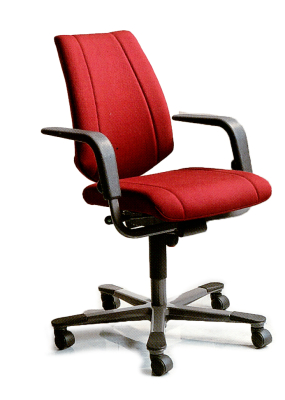
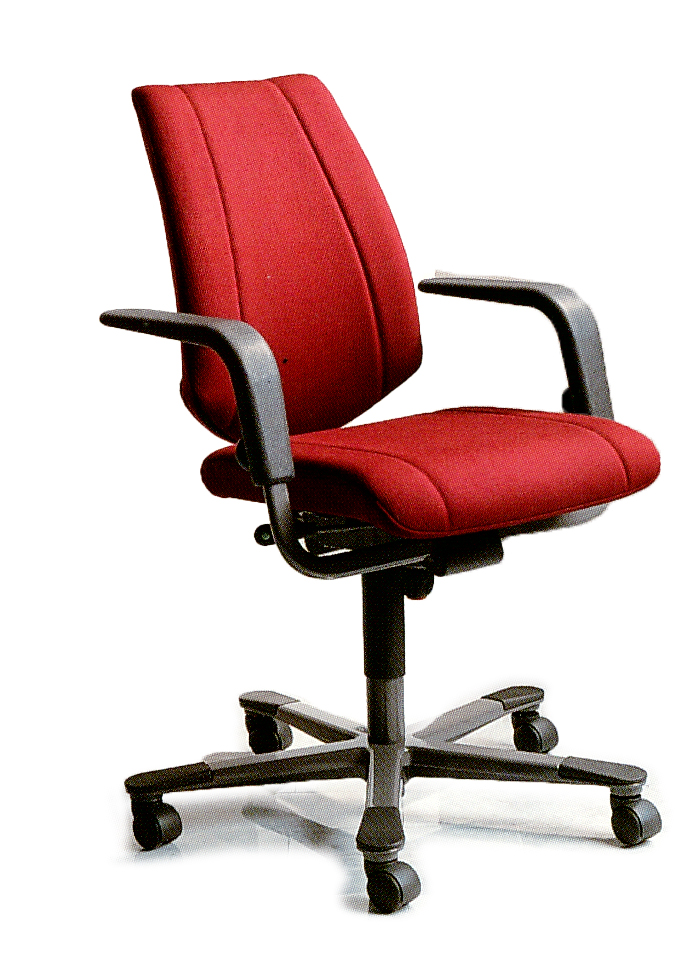
Design: 1992
Licensee: HÅG
(HÅG Credo 2000: 1982-1992)
HÅG Credo 3000: 1992-2003 (Renamed to H04, 2004)
H05: 2000-2017
Creed: 2017 -
HÅG Credo was the first office chair that tilted freely
Developing the balanced movement principle further
Peter continued to develop Credo’s balanced movement principle after the chair was introduced. He became increasingly aware that lighter users, who often also preferred a shorter seat depth, could find the resistance too great when tilting forwards. The principle was right, but the chair did not respond equally well to everyone.
Credo 3000, introduced in 1992, addressed this by making it possible to adjust the resistance of the forward tilt to one of three settings. This allowed the chair to be balanced for a wider range of users while retaining the same fundamental principle of foot-controlled movement.
A new footbase was also introduced, with plastic supports at the end of each of its five legs, inviting the sitter to place the feet at another level and creating additional possibilities for support and variation.
Credo became a major commercial success. In 1997, the one-millionth Credo was delivered to a customer in Oslo, and by the late 1990s it was one of Europe’s best-selling office chairs.
The adjustable forward resistance was an important improvement, but the adjustment itself was not particularly simple. For Peter, the development did not stop when a problem had been solved. The next question was whether it could be solved better.